The Evolution of Kenyan Cyber Cafes into Freelance and Remote Work Hubs
13 March 2026
Discover how Kenyan cyber cafes are transforming into modern freelance hubs. Learn why these remote work spots are the future of the East African gig economy.
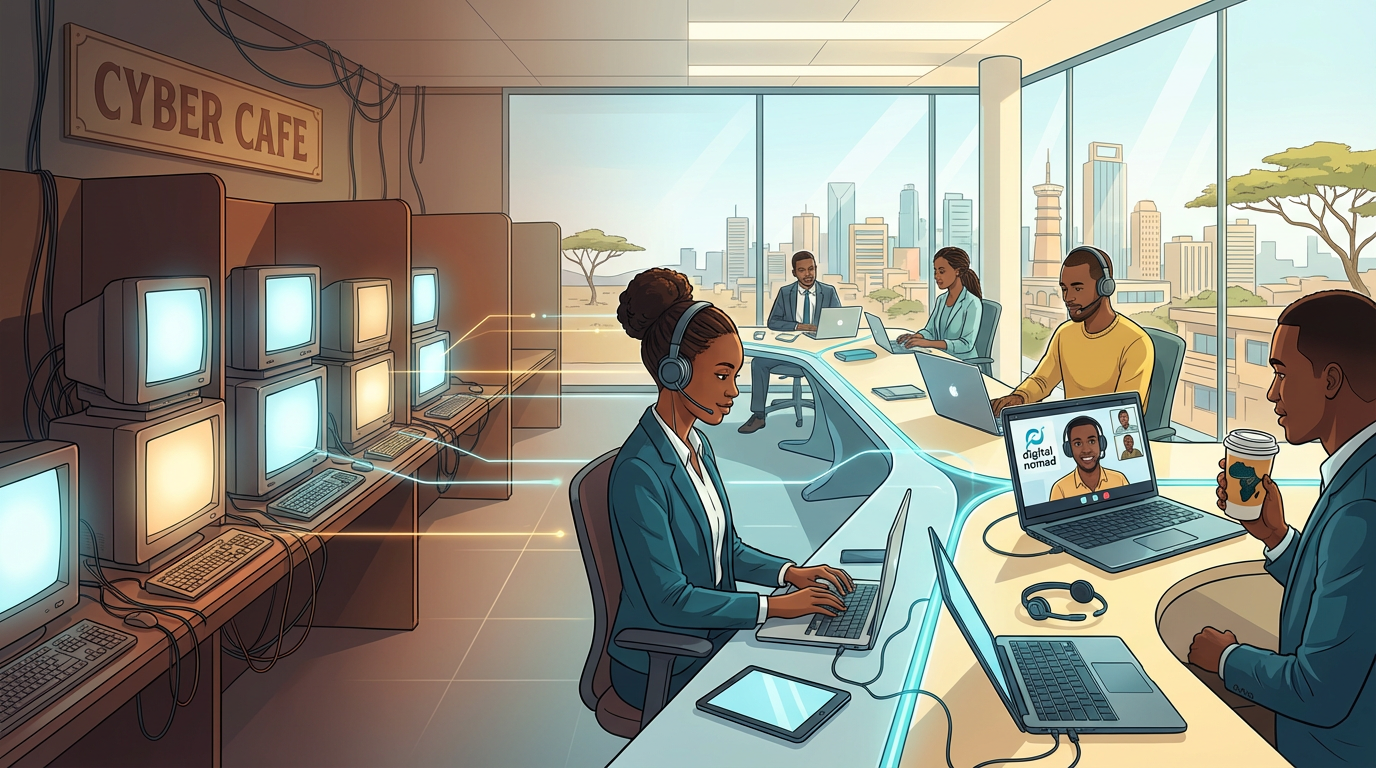
If you walked into a Kenyan cyber café in 2005, the air was filled with the rhythmic clicking of bulky mechanical keyboards and the screech of dial-up connections. Back then, "cybers" were primarily for checking Yahoo Mail or printing government forms. Fast forward to today, and a quiet revolution has taken place. The humble neighborhood shop is transforming into a sophisticated freelance hub in Kenya, serving as the backbone of the country’s booming gig economy.
The Shift: From Browsing Centers to Remote Work Hubs
For decades, cyber cafés in Nairobi, Mombasa, and Kisumu were the only gateways to the internet. However, as smartphone penetration increased and home fiber became more accessible, the old business model of charging 1 KES per minute for basic browsing began to fail. To stay relevant, savvy operators have pivoted, rebranding their spaces as remote work spots in Nairobi and beyond.
Today’s modern cyber café isn’t just about computers; it’s about providing a professional environment for transcriptionists, virtual assistants, and software developers who navigate the digital marketplace on platforms like WorkKE.
Cyber Cafe vs. Co-working Space: What’s the Difference?
Many freelancers often debate the cyber cafe vs co-working space dilemma. While high-end co-working spaces in areas like Westlands offer ergonomic chairs and free coffee, neighborhood cyber cafés offer something arguably more valuable to the average Kenyan freelancer: affordability and proximity.
- Cost: Co-working spaces can cost upwards of KES 1,000 per day, whereas a renovated cyber café might offer a "day pass" for as little as KES 200.
- Accessibility: You don't need to spend two hours in traffic to get to a cyber café in Roysambu or Utawala; they are right where you live.
- Services: Cyber cafés provide instant access to printing, scanning, and laminating—essential for those handling government tenders or physical contracts.
Why Kenyan Freelancers are Returning to Cyber Cafes
Remote work sounds glamorous until the power goes out or your home Wi-Fi starts lagging during a crucial client meeting. This is where the evolution of these hubs becomes critical. Many operators now invest in power backups (UPS and inverters) and high-speed fiber connections to attract professional freelancers.
As freelance hubs in Kenya, these spaces foster a community. You’ll often find "transcription dens" or "academic writing zones" within a cyber café, where peers share tips, help each other troubleshoot technical issues, and even trade leads found on WorkKE.
Top Work from a Cyber Cafe Tips for Success
Transitioning from a home office to a public hub requires a strategy. To stay productive and secure, follow these work from a cyber cafe tips:
- Prioritize Security: Never save your passwords on public computers. Use Two-Factor Authentication (2FA) for your WorkKE and M-PESA accounts.
- Invest in Noise-Canceling Headphones: The local "cyber" can be noisy. A good pair of headphones helps you maintain focus during deep work sessions.
- Get a Dedicated Workspace: Many operators now offer "reserved desks" for monthly subscribers. This gives you a sense of ownership and ensures you always have a spot during peak hours.
- Leverage the Operator: Cyber café operators are often tech-savvy. Build a relationship with them; they can be your first line of defense when your laptop has a hardware glitch.
The Future: Digital Hubs and the Gig Economy
The government's push for digital literacy and the "Ajira Digital" initiative has further cemented the role of these hubs. We are seeing a trend where cyber cafés are no longer just service providers but intermediaries. Some operators even curate "freelance teams" within their shops to take on large-scale projects from international and local clients.
For the individual freelancer, these hubs represent the democratization of work. Whether you are in a small town in Meru or the heart of CBD, a well-equipped cyber café is your ticket to a global career.
Conclusion: Join the Digital Revolution
The evolution of the Kenyan cyber café is a testament to the resilience and innovation of the Kenyan spirit. By transforming into remote work spots, these businesses are ensuring that every Kenyan has the opportunity to participate in the global digital economy. Whether you are a client looking for talent or a freelancer seeking a stable place to work, platforms like WorkKE are here to bridge the gap.
Ready to take your freelance career to the next level? Sign up on WorkKE today and connect with thousands of clients across East Africa!
Frequently Asked Questions (FAQ)
Are cyber cafes safe for accessing my freelance accounts?
While generally safe, you should always use Incognito mode, never "remember passwords," and ensure you log out of all sessions. Using your own laptop via the cafe's Wi-Fi is the safest option.
How much does it cost to work from a cyber cafe in Kenya?
Prices vary by location, but most hubs charge between KES 100 to KES 300 for a full day of high-speed internet access and power.
Can I find specialized freelance work at these hubs?
Many hubs are hotspots for transcription, data entry, and writing. However, the best way to find work is to create a professional profile on WorkKE to showcase your skills to potential clients.
Related articles
- How to Earn More From Your Cybercafé in Kenya by Selling Airtime With WorkKE
- How to Build a Profitable Digital Products Business in Kenya in 2026 (Without Burnout)
- What Kenyan Clients Actually Look for in a Freelance Proposal (2026 Guide)
- Freelancer Rates in Kenya 2026: Web Design, Writing & More
- The Machines Always Come: What AI Means for the Future of Work in Africa
- 10 Free SEO Tools Every Kenyan Freelancer Should Use in 2026