The Machines Always Come: What AI Means for the Future of Work in Africa
11 September 2026
AI is reshaping Africa's job market. Discover how Kenyan freelancers, cybercafés, and SMEs can adapt and thrive in the AI-driven future of work.
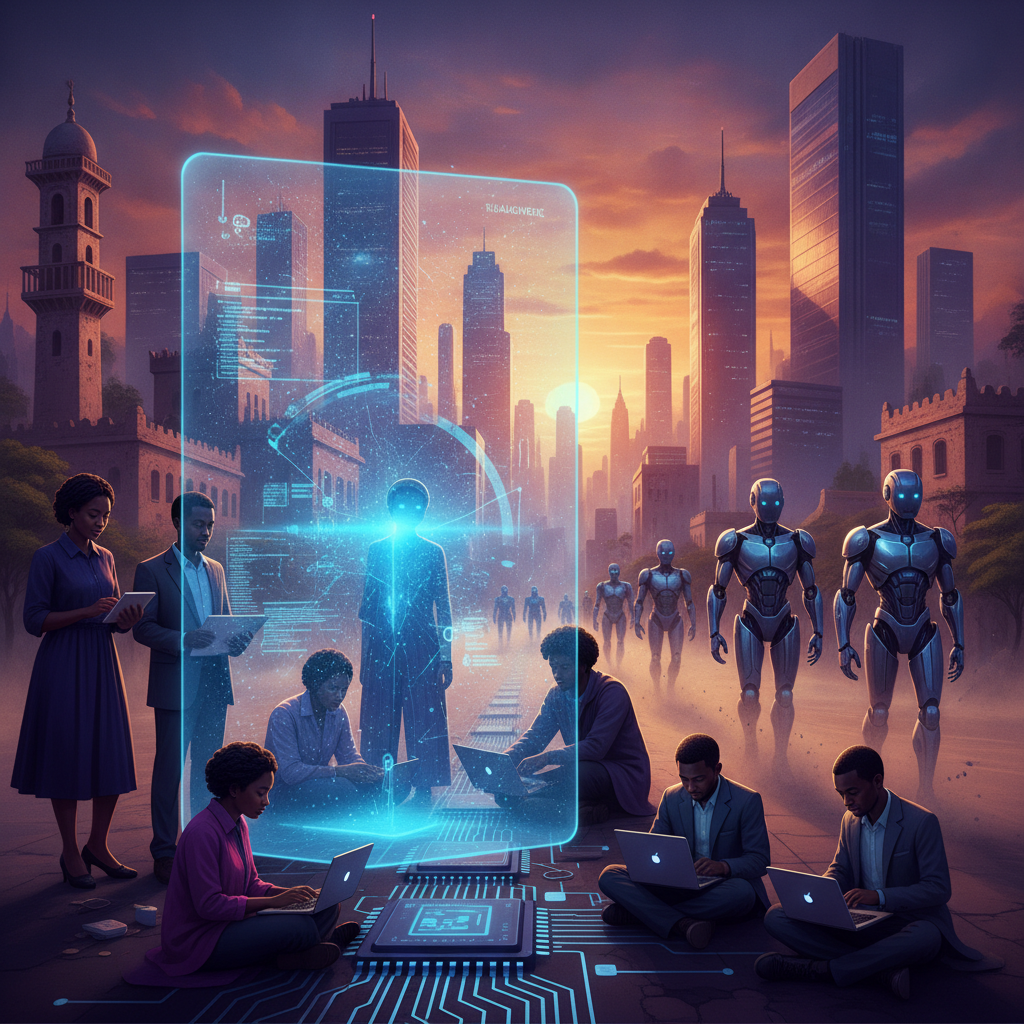
Imagine walking into your local cybercafé in Nairobi and seeing a sign: “AI-powered CV revamping – KES 500.” That’s not a scene from 2030; it’s happening in 2026. As artificial intelligence (AI) sweeps across industries, from customer service to graphic design, the question on every Kenyan freelancer’s mind is: Will machines take my job? The short answer: they’ll take tasks, not entire livelihoods—if you adapt. In this post, we’ll explore what AI means for the future of work in Africa, and how you can position yourself to win.
Why AI Is Not Just a Western Disruption
When people talk about AI, they often picture Silicon Valley. But AI is already woven into Africa’s daily digital fabric. Mobile money platforms like M-PESA use AI for fraud detection. Boda boda apps use AI to match riders. Even small cybercafés now use AI tools to automate document formatting and translation.
According to a 2026 report by the African Development Bank, over 40% of Kenyan businesses have adopted at least one AI tool—up from 12% in 2023. This isn’t a distant wave; it’s a tsunami hitting our shores now.
What AI Actually Automates (and What It Can’t)
AI excels at repetitive, data-heavy tasks. It can draft a thousand social media posts, generate basic logos, or answer common customer queries. But it still struggles with:
- Human empathy – comforting a client or negotiating a sensitive deal.
- Cultural nuance – understanding Sheng phrases or local humor.
- Physical presence – fixing a printer at a cybercafé or meeting a client in person.
- Complex problem-solving – designing a tailored business strategy for a Kenyan SME.
In short, AI automates tasks, not jobs. The freelancer who learns to delegate repetitive work to AI and focus on high-value human skills will thrive.
The Freelancer’s New Toolbox
Kenyan freelancers are already using AI to boost earnings. Take graphic designer Amina from Mombasa: she uses AI to generate initial concepts, then refines them manually. Her turnaround time dropped by 40%, allowing her to take on more clients on WorkKE. Similarly, writers use AI for research and outlining, then add unique Kenyan insights that AI can’t replicate.
To stay competitive, build these AI-augmented skills:
- Prompt engineering – crafting effective commands for tools like ChatGPT or Midjourney.
- AI output editing – fact-checking and humanizing AI-generated content.
- Data literacy – interpreting AI analytics to make better decisions.
- Hybrid creativity – combining AI suggestions with your own originality.
How Cybercafés Can Evolve into AI Hubs
Cybercafés have long been the backbone of digital access in Kenya. But with cheap smartphones and data, their traditional services (printing, scanning) are declining. The smart move? Become an AI service hub.
- Offer AI resume writing – use AI to tailor CVs for specific job postings, charge KES 800–1,500.
- AI-powered logo design – generate logos with AI, then add a human touch, charge KES 2,000+.
- Virtual assistant station – let freelancers rent a desk with AI tools installed.
- Training workshops – teach locals how to use AI for business, charge KES 500 per session.
Cybercafé operators who pivot now will not only survive but become indispensable community tech hubs.
The Rise of AI-Enabled Gig Work
Platforms like WorkKE are seeing a surge in AI-related gigs: data annotation, AI model testing, prompt writing, and chatbot training. These jobs often pay in USD or KES via M-PESA, offering flexible income for students and side-hustlers. In 2026, AI gigs are projected to grow by 60% across East Africa.
Africa’s Unique Advantage in the AI Era
While AI threatens some jobs, it also creates opportunities that Africa is uniquely positioned to seize:
- Young population – a growing talent pool eager to learn digital skills.
- Mobile-first infrastructure – M-PESA makes paying AI freelancers seamless.
- Leapfrogging potential – just as we skipped landlines for mobile, we can skip legacy AI adoption barriers.
- Local data richness – African languages and contexts are underrepresented in AI, creating demand for local trainers.
The key is not to resist AI but to shape it. African freelancers can become the global trainers, ethicists, and creative directors for AI systems.
Practical Steps to Future-Proof Your Career
Whether you’re a freelancer, client, or cybercafé operator, here’s how to stay ahead:
- Learn one AI tool deeply – e.g., ChatGPT, Canva AI, or Grammarly.
- Upskill continuously – take free courses on AI for business via WorkKE’s resources or local hubs.
- Emphasize human skills – negotiation, empathy, and storytelling are AI-proof.
- Leverage M-PESA for AI gigs – ensure you can receive international payments easily.
- Join AI communities – forums like AI Kenya or WorkKE’s freelancer network.
Remember: the machines always come, but they also create new doors. Your job is to walk through them.
Frequently Asked Questions
Will AI replace freelancers in Kenya?
AI will replace repetitive tasks, not entire freelancing careers. Freelancers who adapt by using AI as a tool and focusing on human-centric skills will remain in high demand.
How can cybercafés make money with AI?
Cybercafés can offer AI-powered services like resume writing, logo design, and AI training workshops. They can also rent out AI-equipped workstations to freelancers.
What AI skills are most in demand in East Africa in 2026?
Prompt engineering, data annotation, AI content editing, and chatbot training are among the most sought-after skills on platforms like WorkKE.
Is AI a threat to jobs in Africa?
AI is a double-edged sword. It automates some roles but creates new ones. Africa’s young, mobile-first population can leverage AI to leapfrog into high-value digital work.
How do I start a career in AI freelancing?
Begin by learning one AI tool, create a profile on WorkKE, and bid on small AI-related gigs. Build a portfolio, get reviews, and gradually specialize.
Conclusion: Embrace the Machines, Amplify Your Humanity
The AI revolution is not coming to Africa—it’s already here. But rather than a threat, it’s a powerful ally for those willing to adapt. By combining AI efficiency with uniquely human creativity, empathy, and local knowledge, Kenyan freelancers, cybercafé operators, and SMEs can not only survive but thrive.
Ready to future-proof your career? Join WorkKE today—browse AI gigs, upskill with our resources, and connect with clients who value your human touch. The machines are here. Let’s make them work for us.
Related articles
- How to Build a Profitable Digital Products Business in Kenya in 2026 (Without Burnout)
- What Kenyan Clients Actually Look for in a Freelance Proposal (2026 Guide)
- Freelancer Rates in Kenya 2026: Web Design, Writing & More
- 10 Free SEO Tools Every Kenyan Freelancer Should Use in 2026
- 10 Best Digital Store Providers in Kenya for 2026: Complete Guide
- Social Media Management Packages Kenya: 2026 Pricing Guide