What Kenyan Clients Actually Look for in a Freelance Proposal (2026 Guide)
11 September 2026
Discover the exact elements Kenyan clients seek in a freelance proposal in 2026. Learn how to win more projects on WorkKE with a standout proposal.
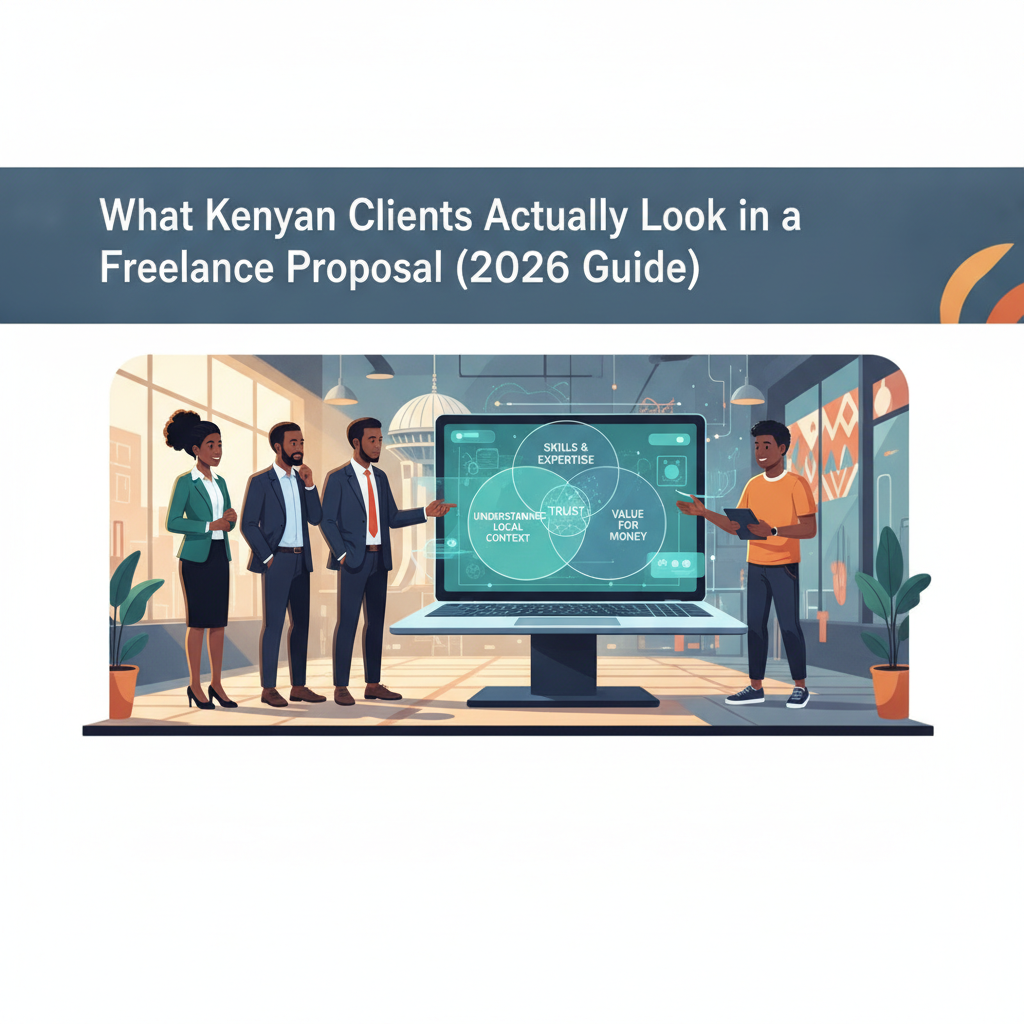
Introduction: The Kenyan Freelance Market in 2026
Did you know that over 60% of Kenyan clients reject freelance proposals within the first 30 seconds? With the gig economy booming in 2026, competition is fierce. To stand out, you need to understand what Kenyan clients actually look for in a proposal. This guide reveals the key elements that win projects on platforms like WorkKE.
Why Most Freelance Proposals Fail in Kenya
Many freelancers send generic, copy-paste proposals. Kenyan clients are savvy—they can spot a template from a mile away. In 2026, clients expect personalized, value-driven pitches that address their specific needs.
Common Mistakes to Avoid
- Using the same proposal for every job
- Focusing on yourself instead of the client's problem
- Ignoring local context (e.g., M-PESA payments, local timelines)
- Failing to showcase relevant experience
- Poor grammar and typos
Top 7 Things Kenyan Clients Look for in a Freelance Proposal
1. Clear Understanding of Their Needs
Clients want to feel heard. Start your proposal by restating their problem in your own words. Show that you've read their job post carefully. For example, if they need a website for their cybercafé, mention specific features like online booking or M-PESA integration.
2. Relevant Experience and Portfolio
Kenyan clients value proof. Include links to similar projects you've completed, especially those targeting East African audiences. If you've worked with local businesses, highlight that.
3. Localized Solutions
Demonstrate cultural and economic awareness. Mention how you'll handle payments (e.g., M-PESA), time zones (EAT), and local regulations. This shows you're not just a remote freelancer but a partner who understands the Kenyan market.
4. Transparent Pricing and Timeline
Be upfront about costs in KES and milestones. Kenyan clients appreciate clarity—hidden fees are a deal-breaker. Provide a realistic timeline that accounts for local holidays and potential delays.
5. Professional Communication
Your proposal's tone and structure matter. Use proper grammar, bullet points for readability, and a polite greeting. Avoid slang unless the client uses it first.
6. Call to Action
End with a clear next step. For example, "I'd love to discuss this further. Please message me on WorkKE to schedule a call." This makes it easy for the client to engage.
7. Social Proof and Reviews
If you have positive reviews on WorkKE, mention them. Kenyan clients trust peer feedback. A high rating can set you apart.
How to Structure a Winning Freelance Proposal
Follow this simple structure to make your proposal stand out:
- Personalized Greeting: Use the client's name and reference their project.
- Problem Statement: Show you understand their pain points.
- Your Solution: Outline how you'll solve the problem.
- Relevant Experience: Share similar projects with links.
- Pricing & Timeline: Be transparent in KES.
- Call to Action: Invite them to discuss further.
Example of a Winning Proposal Snippet
"Hi [Client Name], I noticed you need a logo for your new cybercafé in Nairobi. I've designed logos for over 10 local businesses, including [Example]. I'll deliver 3 concepts in 5 days for KES 15,000. Let's chat on WorkKE to get started!"
Leveraging WorkKE to Win More Projects
WorkKE connects you with clients actively seeking your skills. To maximize your chances:
- Complete your profile with a professional photo and detailed skills.
- Browse available jobs on WorkKE and apply only to relevant ones.
- Use the platform's messaging to ask clarifying questions before sending a proposal.
- Collect reviews after each project to build credibility.
Frequently Asked Questions (FAQ)
What is the most important part of a freelance proposal in Kenya?
The most important part is showing that you understand the client's specific needs. Personalization beats generic templates every time.
How long should a freelance proposal be?
Keep it concise—ideally under 300 words. Focus on value, not length. Kenyan clients are busy and appreciate brevity.
Should I include my rates in the proposal?
Yes, but provide a range or a fixed price in KES. Transparency builds trust. If you're unsure, offer to discuss after understanding the full scope.
How can I stand out if I'm new to freelancing?
Highlight transferable skills, offer a competitive rate, and include any personal projects. Consider taking small jobs first to build reviews on WorkKE.
Is it necessary to mention M-PESA in my proposal?
Not always, but it can be a plus. If the project involves payments, mentioning M-PESA shows you're locally aware and ready to accommodate client preferences.
Conclusion: Take Action Today
Winning freelance proposals in Kenya requires a mix of personalization, transparency, and local insight. By following this 2026 guide, you'll be well-equipped to impress clients and secure more projects. Ready to put these tips into practice? Join WorkKE today and browse available jobs. Your next client is waiting!
Related articles
- How to Build a Profitable Digital Products Business in Kenya in 2026 (Without Burnout)
- Freelancer Rates in Kenya 2026: Web Design, Writing & More
- The Machines Always Come: What AI Means for the Future of Work in Africa
- 10 Free SEO Tools Every Kenyan Freelancer Should Use in 2026
- 10 Best Digital Store Providers in Kenya for 2026: Complete Guide
- Social Media Management Packages Kenya: 2026 Pricing Guide