How Kenyan Cybercafés are Rebranding as Smart Worker Hubs in 2026
24 April 2026
Discover how Kenya's cybercafés are transforming into Smart Worker Hubs in 2026. Learn about eCitizen trends, the smart worker toolkit, and the future of freelancing.
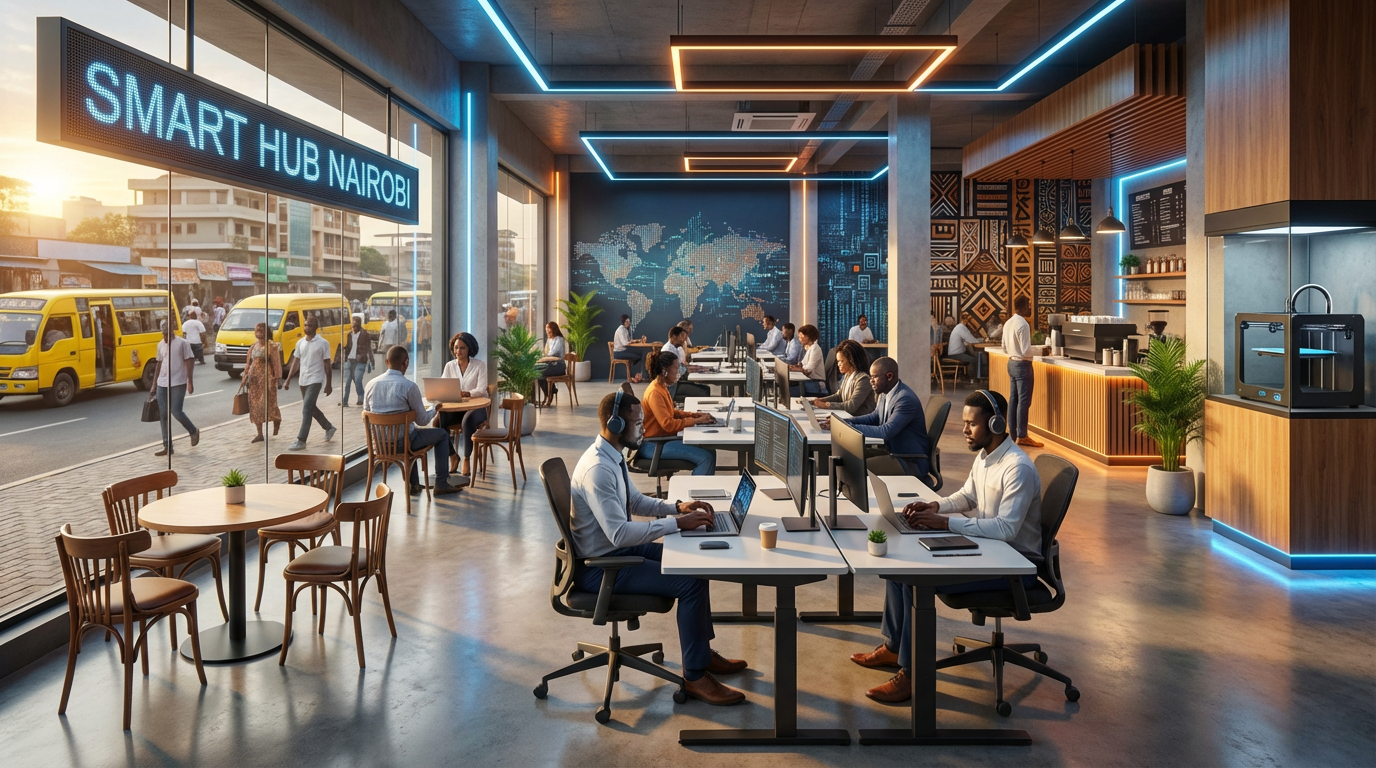
The traditional cyber cafe business in Kenya 2026 has undergone a radical transformation. Gone are the days of cramped booths and dusty CRT monitors. Today, across Nairobi, Kisumu, and Mombasa, a new era has dawned: the era of the Smart Worker Hub. As the digital economy scales, these hubs have become the backbone of Kenya's "Silicon Savannah," serving as critical bridges for freelancers, government services, and remote professionals.
The Evolution of the Cyber Cafe Business in Kenya 2026
In 2026, the demand for high-speed internet and basic printing has evolved into a need for comprehensive digital service hubs in Kenya. The shift was driven by two major factors: the total digitization of government services and the massive growth of the local freelance workforce. Operators who once relied on gaming and social media browsing have pivoted to support a more professional clientele.
Modern hubs now offer "Pro-Pods"—soundproof booths for Zoom meetings—and high-spec workstations tailored for graphic designers and software developers. By integrating WorkKE’s platform, these hubs now act as physical touchpoints where clients can meet freelancers in a secure, professional environment.
Key Features of a 2026 Smart Worker Hub
- Reliable Power Redundancy: With advanced solar integration and high-capacity backup, work never stops during grid fluctuations.
- High-Speed Fiber Infrastructure: 5G-enabled routers and dedicated fiber lines are now the industry standard.
- The Smart Worker Toolkit: Hubs provide access to premium software subscriptions, high-end scanning, and 3D printing services.
- Secure Financial Terminals: Integration with M-PESA and WorkKE's escrow systems for seamless project payouts.
The eCitizen 2026 Revolution: Centralizing Government Services
The eCitizen services 2026 landscape has expanded to include over 10,000 automated processes. While most Kenyans can access these via mobile, the need for assisted digital services remains high. Smart Worker Hubs have stepped in as "Certified Digital Service Points," helping citizens navigate complex applications for land titles, business permits, and international trade licenses.
For cybercafé operators, this shift means higher foot traffic and a more stable revenue stream. By positioning your business as an eCitizen expert, you become an indispensable part of your local community's economic lifecycle.
Equipping the Modern Freelancer: The Smart Worker Toolkit
To compete globally, Kenyan freelancers need more than just a laptop. They need a smart worker toolkit. Smart Worker Hubs are filling this gap by offering "Membership Packages" that include:
- Access to ergonomic workstations that prevent back strain during long coding sessions.
- Vetted profiles on platforms like WorkKE, where their skills are visible to both local and international clients.
- In-house training workshops on AI-assisted workflows and international tax compliance for remote workers.
How to Transition Your Cybercafé into a Hub
If you are an operator looking to stay relevant in 2026, the transition is essential. Start by auditing your current space. Can you replace three standard desks with one private meeting pod? Can you partner with WorkKE to become a verified "WorkKE Hub" where users can withdraw their earnings or conduct physical consultations?
Networking is the new currency. Successful hubs in 2026 aren't just shops; they are communities. Hosting weekly "Freelancer Meetups" can turn a quiet morning into a networking goldmine for your clients, ensuring they return to your hub as their primary office.
"The future of work in East Africa isn't just remote; it's supported. Smart Worker Hubs provide the physical infrastructure that the digital nomad dream actually requires." ~ WorkKE Industry Report 2026.
Conclusion: Join the Future of Work
The rebranding of Kenyan cybercafés into Smart Worker Hubs is more than a trend; it is a necessary evolution. Whether you are a freelancer looking for a professional home or an operator looking to scale, the opportunities in 2026 are limitless. By leveraging platforms like WorkKE, you can bridge the gap between local talent and global demand.
Ready to elevate your digital game? Create your WorkKE profile today or find a certified Smart Worker Hub near you to start working smarter, not harder.
Frequently Asked Questions
What is the difference between a traditional cybercafé and a Smart Worker Hub?
Traditional cybercafés focused on basic internet access and gaming. Smart Worker Hubs in 2026 focus on providing a professional ecosystem for freelancers, including high-speed internet, private meeting spaces, and specialized software tools.
How much does it cost to use a Smart Worker Hub in Kenya?
Prices vary by location, but most hubs offer flexible pricing starting from KES 200 for a few hours to monthly memberships ranging from KES 5,000 to KES 15,000, often including coffee and printing credits.
Can I access all eCitizen services 2026 at these hubs?
Yes, most rebranded hubs have trained staff to assist with the full suite of eCitizen services, ensuring your applications are submitted correctly and securely.
How does WorkKE benefit hub operators?
WorkKE connects hub operators with a steady stream of freelancers and clients who need professional spaces to work and meet, increasing foot traffic and brand authority.
Related articles
- How to Earn More From Your Cybercafé in Kenya by Selling Airtime With WorkKE
- How to Build a Profitable Digital Products Business in Kenya in 2026 (Without Burnout)
- What Kenyan Clients Actually Look for in a Freelance Proposal (2026 Guide)
- Freelancer Rates in Kenya 2026: Web Design, Writing & More
- The Machines Always Come: What AI Means for the Future of Work in Africa
- 10 Free SEO Tools Every Kenyan Freelancer Should Use in 2026